Rento, built for the
vehicles nobody
is using.
A peer-to-peer rental marketplace for India that turns idle bikes, scooters and cars into income, and makes renting from a stranger feel as safe as renting from a company.
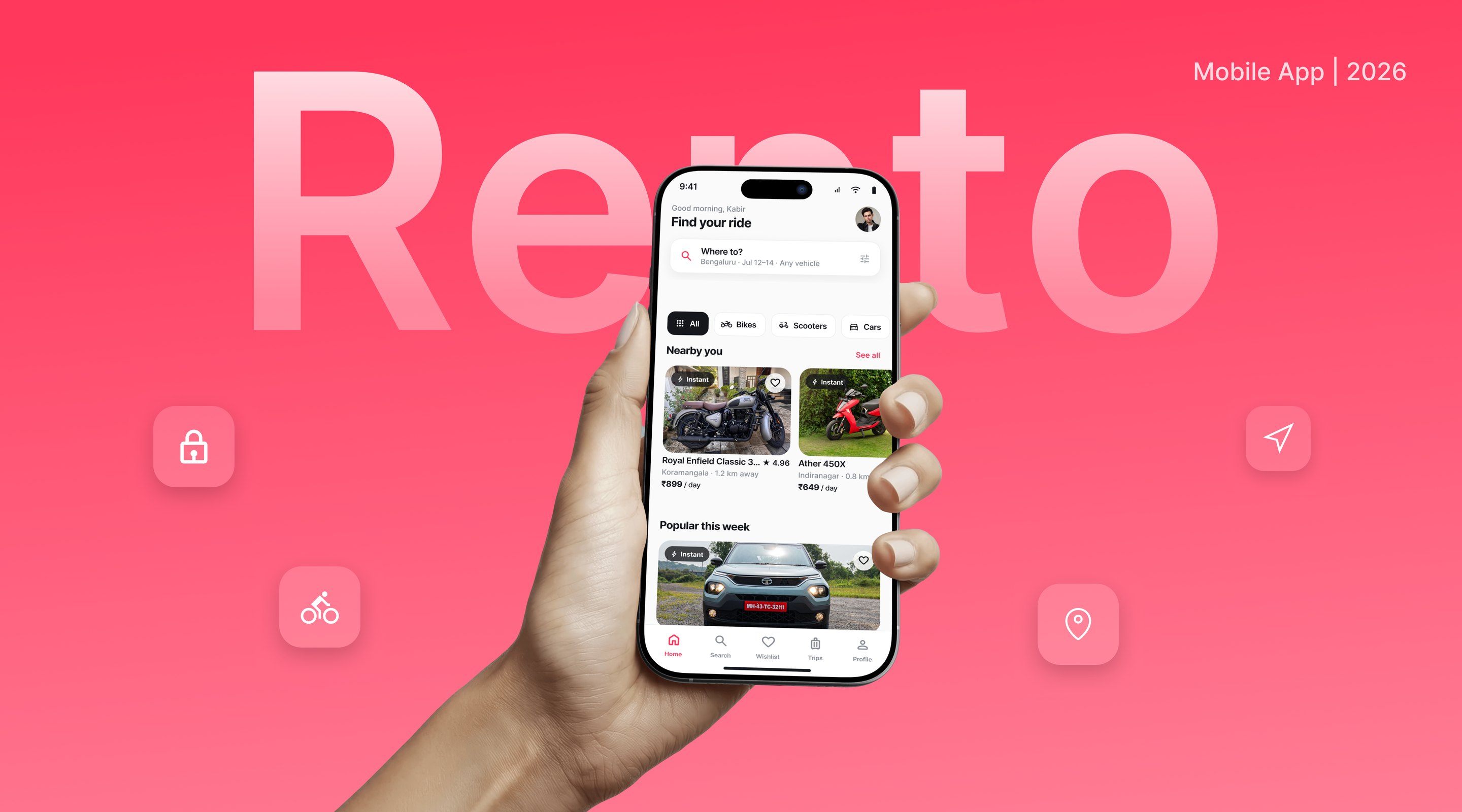
What is Rento?
Rento is a peer-to-peer vehicle rental marketplace. People list the bikes, scooters and cars that sit parked outside their building, and other people rent them for a few hours or a few days. It is the Airbnb model applied to the most under-used asset most Indian households own.
The product has two modes in one app. In renting mode you search by location and dates, browse verified vehicles nearby, book, sign and pay. In hosting mode you list a vehicle, accept or decline requests, and track earnings. Rento sits in the middle and owns the part neither side can solve alone: the trust.
Problem statement
India’s cities are full of vehicles nobody is using and people who need one for a few hours. The gap between them is not supply and it is not demand. It is trust.
Without verified identity, insurance cover and an enforceable agreement, the owner cannot price the risk of handing over their keys and the renter cannot price the risk of a dispute. Faced with risk they cannot size, both sides default to no.
let anyone rent a vehicle from anyone nearby in under two minutes, while giving both sides enough protection to say yes the first time?
How we solved it
Rento does not try to be a cheaper rental company. It is a trust layer with a booking flow attached. Four guarantees carry every transaction, and each one is surfaced in the interface before money moves, not afterwards.
Verified identity, both ways
Driving licence, Aadhaar KYC and a face match for every user, renter and owner alike. Verification status is visible on the profile and beside the host’s name on every listing.
Insurance and roadside on every trip
Cover is not an upsell buried at checkout. It is included on each booking, priced into the breakdown as its own line, and stated on the vehicle page before the user commits.
A deposit that is held, not charged
A refundable security deposit is placed on hold for the duration of the trip. The distinction is written in plain language on the payment screen because it is the single largest objection.
A signed digital agreement
A full-screen rental agreement naming both parties, the vehicle, the trip window, the rate, the fuel policy and the kilometre limit. Signing is the gate to payment.
The process
we followed
Research objective
The goal was not to validate the idea. Peer-to-peer rental demonstrably works. It was to find precisely where it breaks in an Indian context, and what the smallest set of guarantees is that would carry a first transaction between two strangers. Three things came back.
Vehicles sit idle almost all day
A privately owned vehicle is parked roughly 95% of its life. Bengaluru alone has crossed 1.28 crore registered vehicles and adds around 7.9 lakh more every year, seven in ten of them two-wheelers. That is an enormous amount of paid-for capacity earning nothing, sitting within walking distance of people who need exactly that.
Short-term access is priced for the wrong user
Traditional rental is built around a counter, a minimum duration and a stack of paperwork. Students, tourists, gig workers and people newly arrived in a city need a vehicle for four hours or two days, not a week. The friction and the minimum spend both land in the wrong place, so the trip simply does not happen.
Renting from a stranger carries unpriced risk
Peer-to-peer works only when both people can see what protects them. Without verified identity, insurance, a deposit mechanism and an enforceable agreement, the owner is exposed to damage and the renter is exposed to disputes. Faced with unpriced risk, both sides default to no.
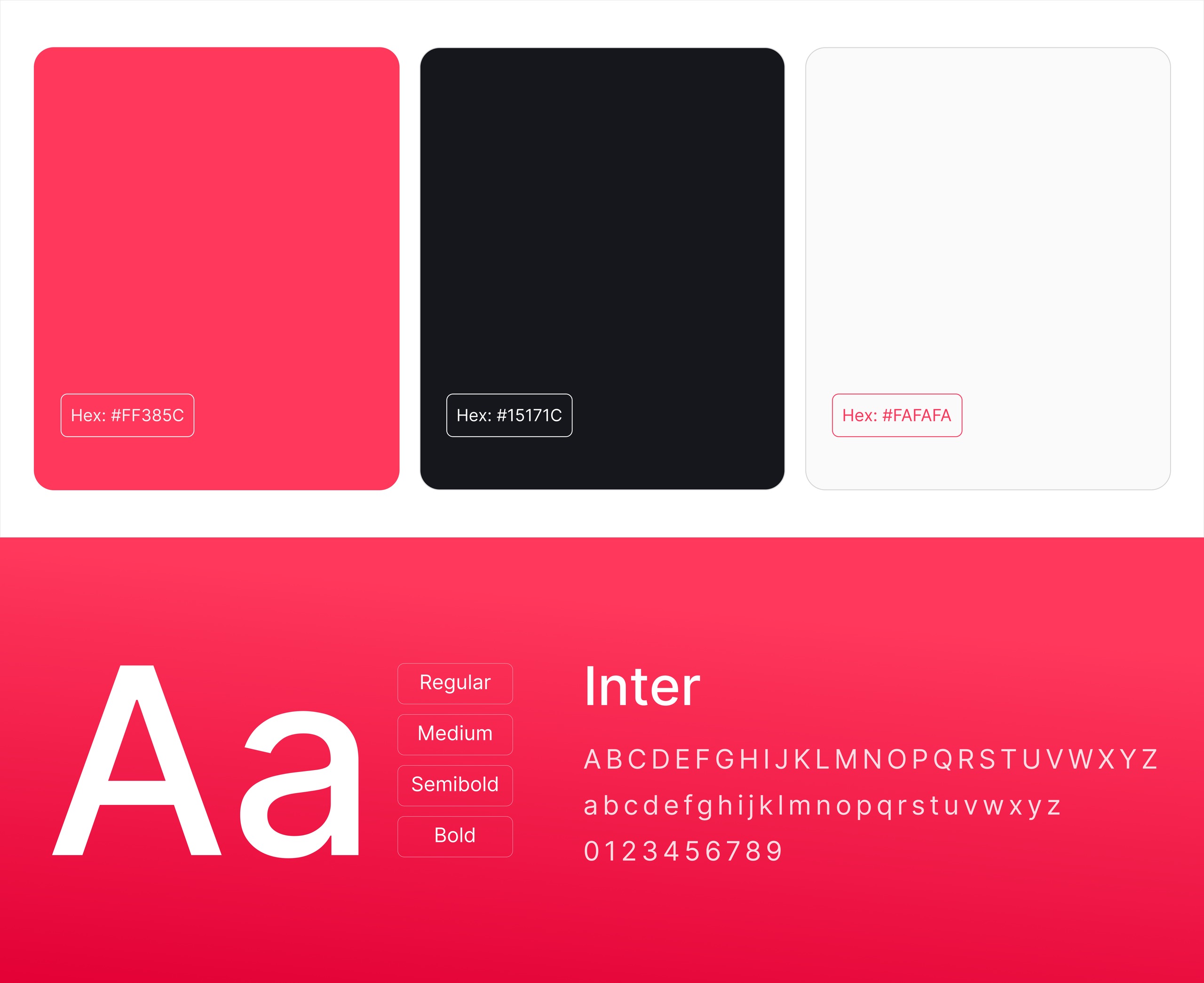
Color Palette &
Typography
High Fidelity UI
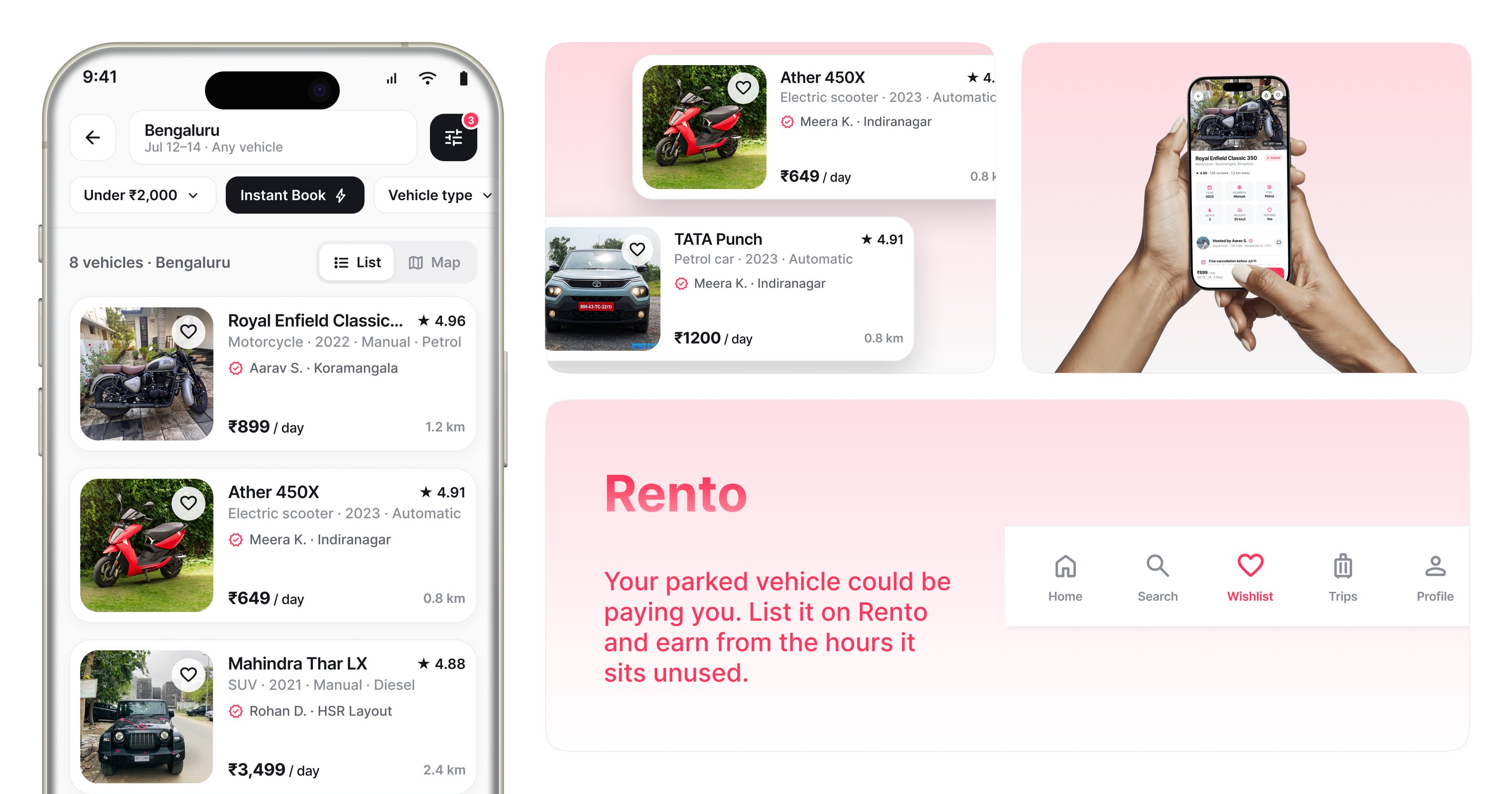
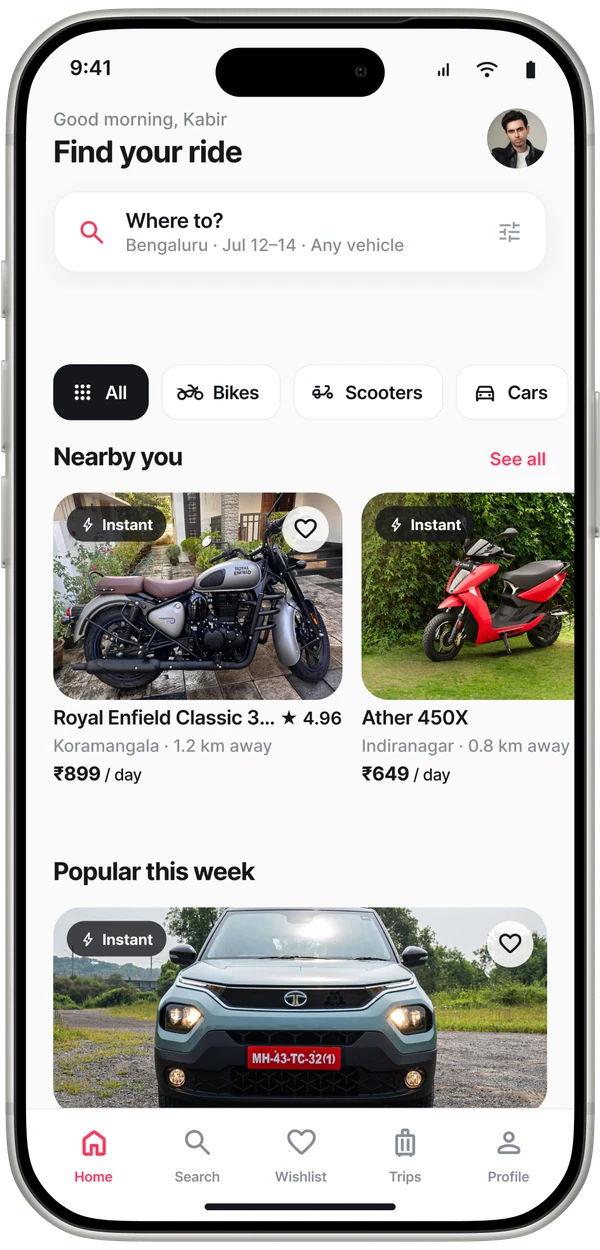 HomePersonalised entry point with search, categories and nearby vehicles
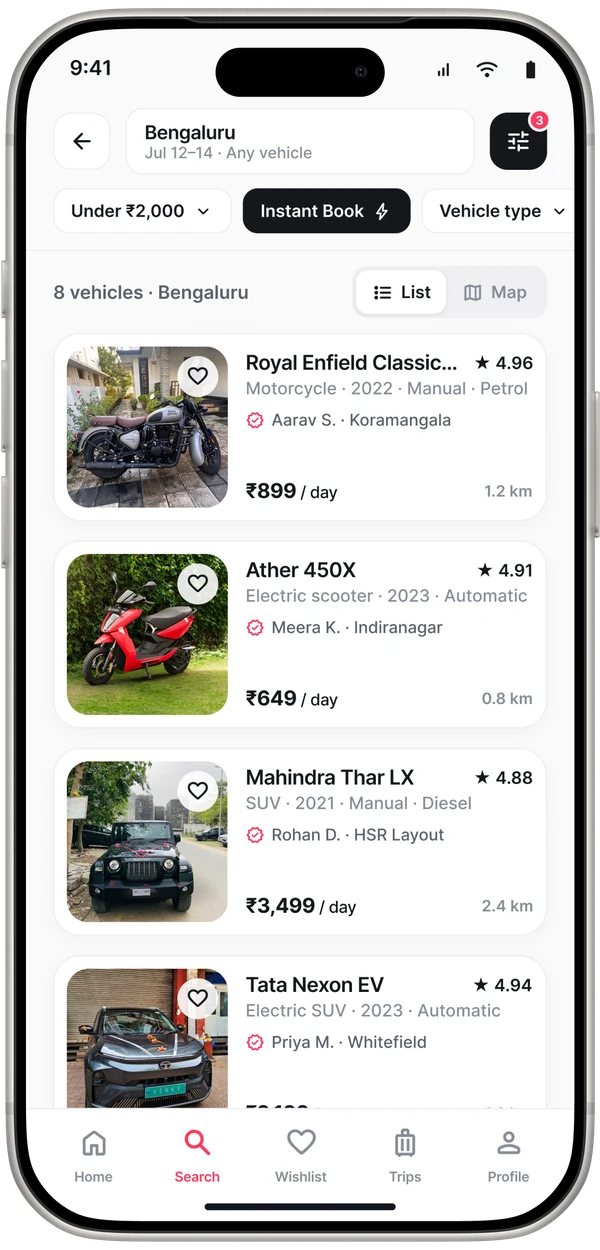 Search · ListFiltered results with verified host and distance
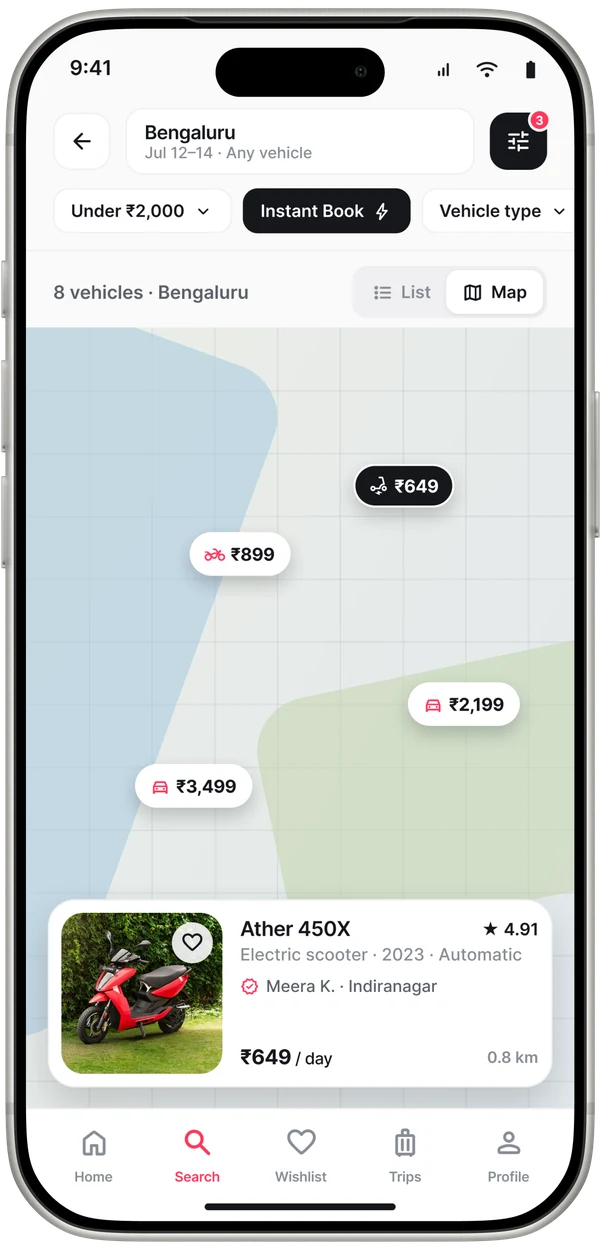 Search · MapPrice pins with a preview card for the selected vehicle
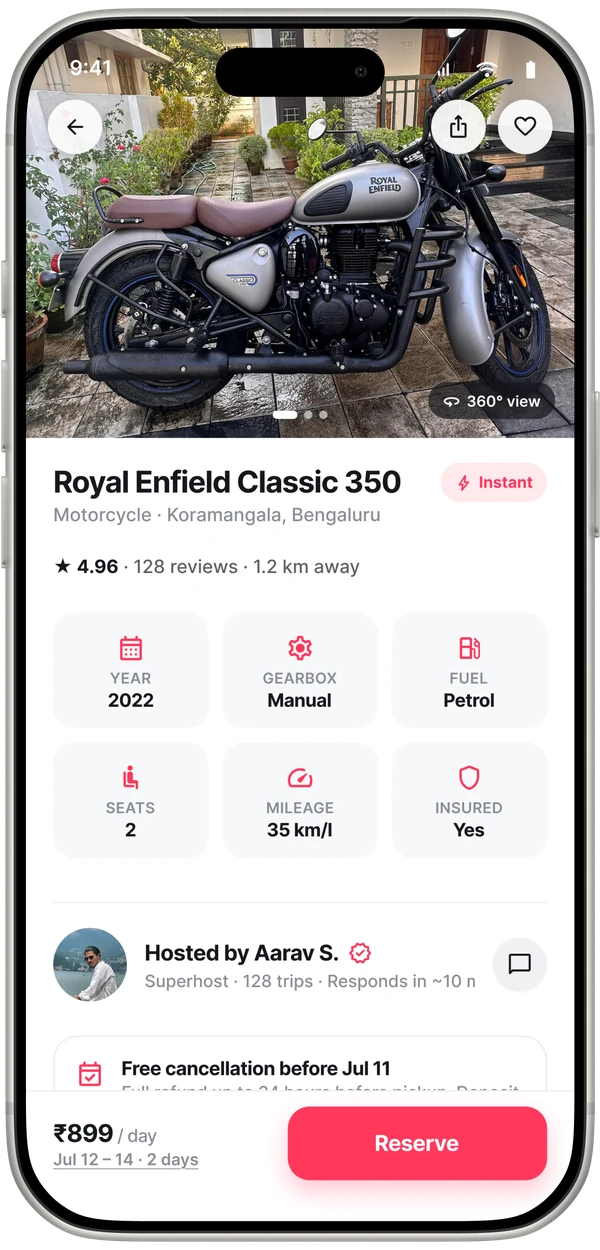 Vehicle DetailGallery, specs, host credibility and cancellation terms
The booking flow
The sequence that carries the trust argument: what you are booking, what you are agreeing to, what you are paying, and how you collect the vehicle. Verification and the signed agreement both resolve before payment.
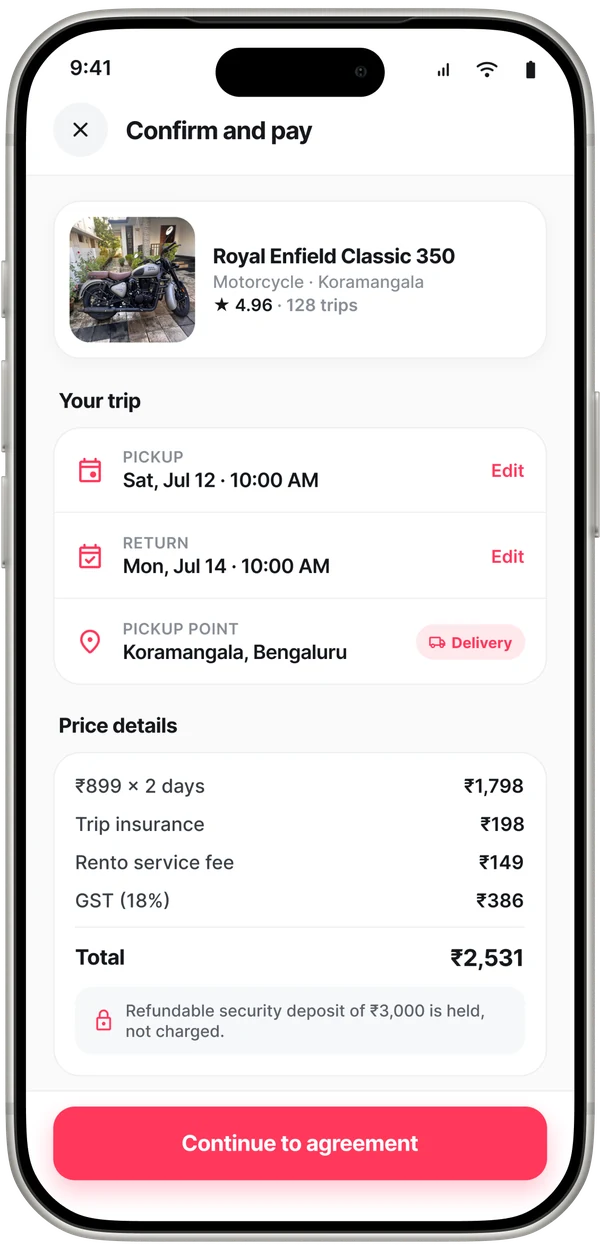 BookingTrip window, pickup point and full price breakdown
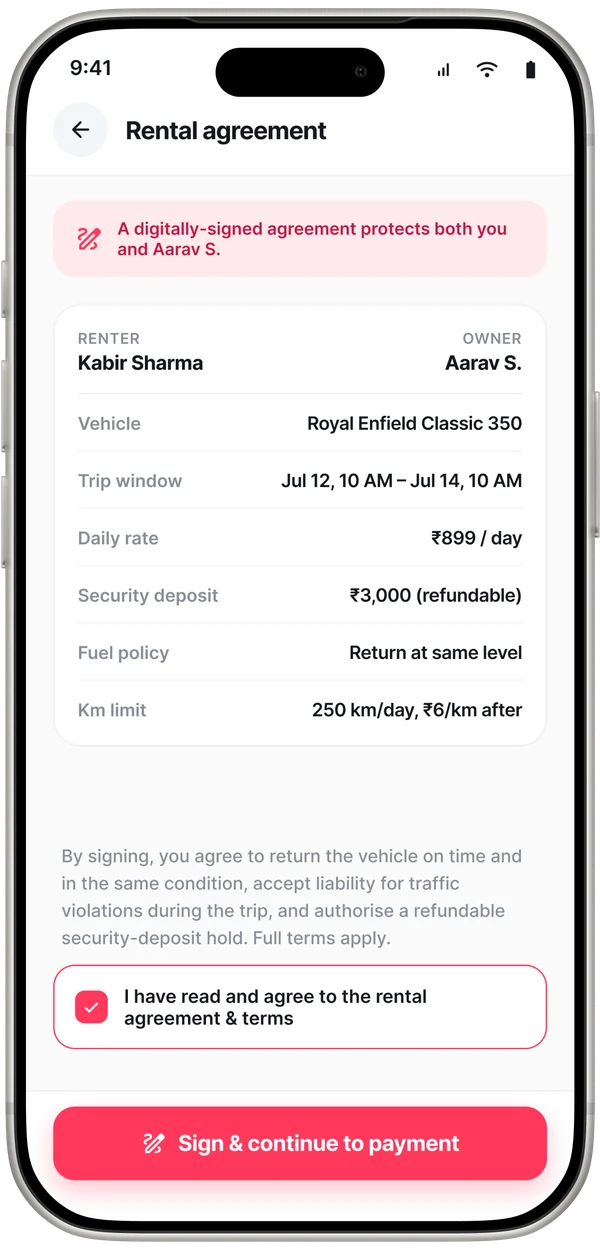 AgreementBoth parties, terms and the signature gate
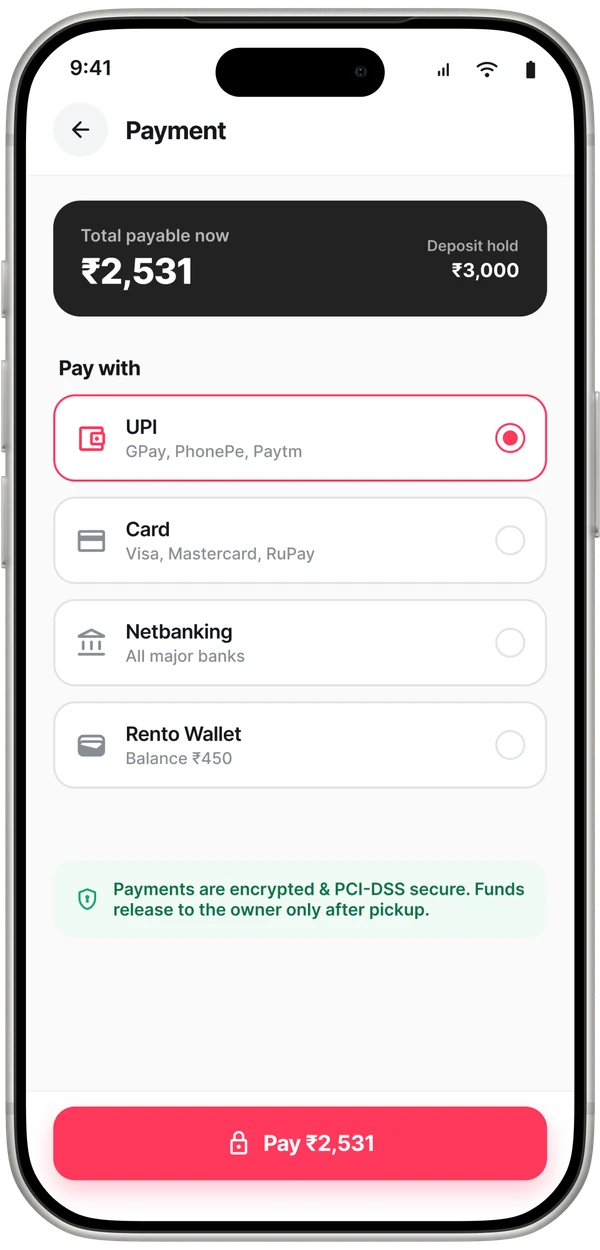 PaymentTotal payable, deposit hold and payment method
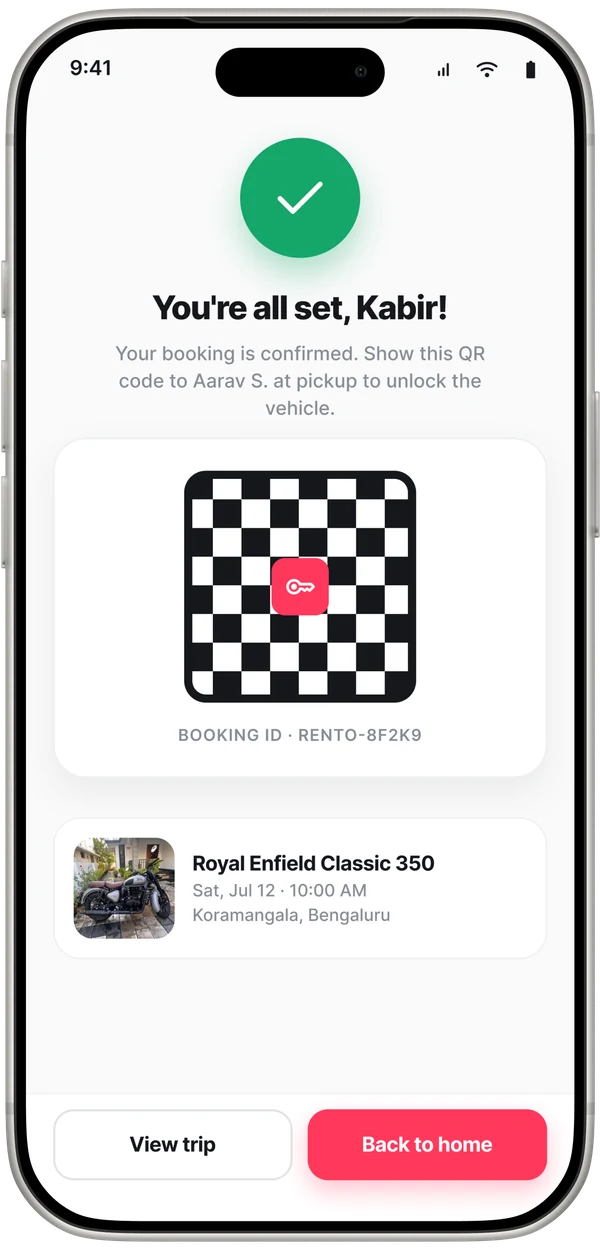 ConfirmedQR pickup pass and booking reference